
Mica Muscovite and Phlogopite - Thermal and dielectric insulators
Supplier & converter - Plates and custom machined parts
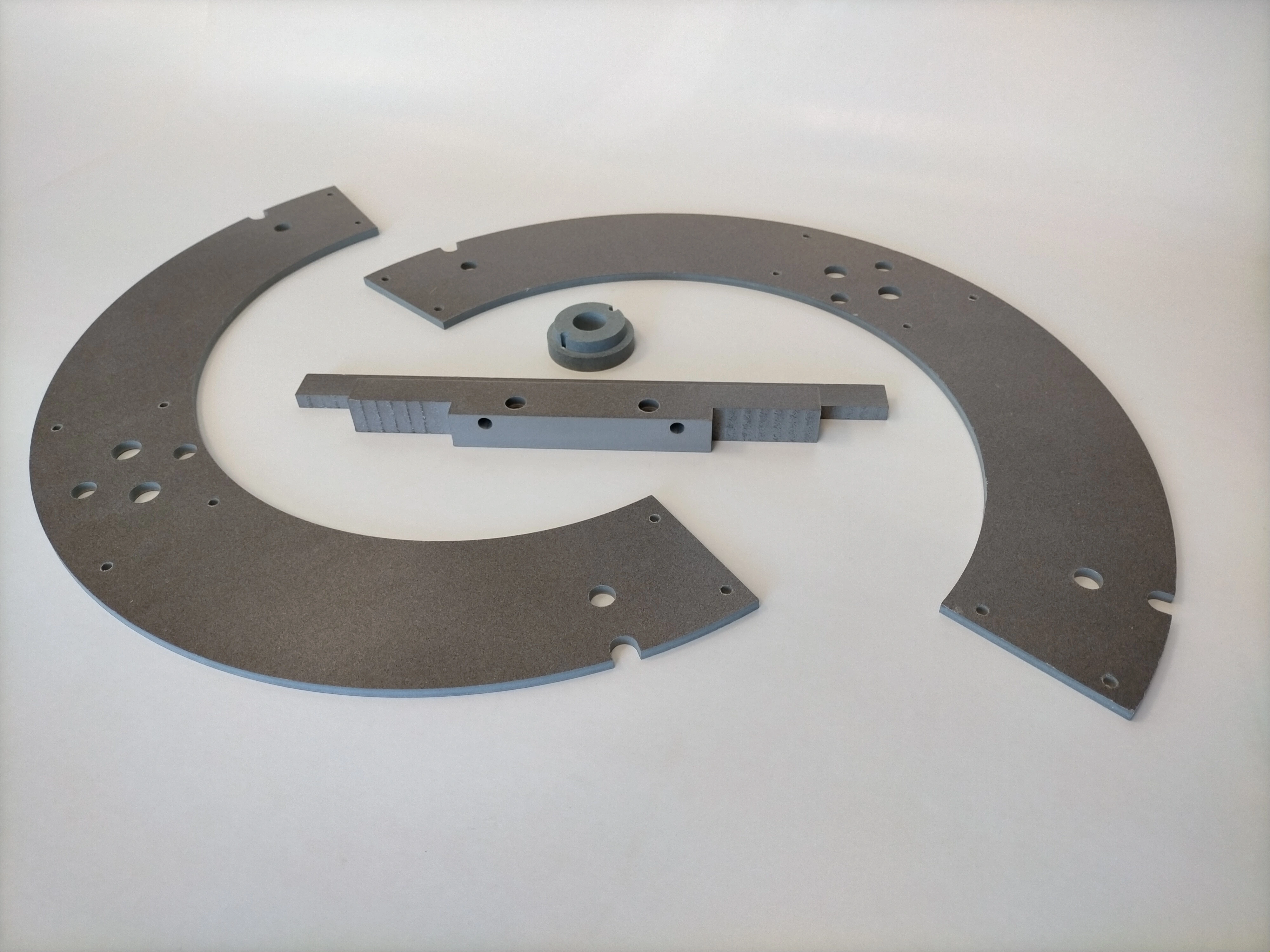
Industrial micas, in particular muscovite mica (white mica) and phlogopite mica (brown mica), arehigh-performance rigid insulation materials. Thanks to their exceptional thermal resistance (up to 1000°C for phlogopite) and high dielectric strength, these natural materials provide effective protection against heat and electricity in the most demanding industrial environments.
Available in sheets, tubes or custom machined parts, ELIT's mica solutions meet the needs of the glass, metal, electrical engineering, thermal and nuclear industries. They are also a safe, durable alternative to old-fashioned asbestos-based insulation.
Our Mica families - Muscovite & Phlogopite
Why Choose Mica for Thermal and Electrical Insulation
Balance between thermal and electrical insulation and mechanical strength
Thanks to their unique combination of thermal resistance, electrical insulation and stability, muscovite and phlogopite micas are used in many industrial sectors. Here are just a few examples of applications in which these mica insulators excel:
- High-temperature industrial furnaces: insulation and lining for melting furnaces, induction furnaces, electric arc furnaces and incinerators. Mica sheets act as thermal barriers inside furnace walls, protecting the metal structure while withstanding extreme heat. Phlogopite, in particular, is used for the internal lining of furnaces requiring > 800°C resistance.
- Electrical heating elements: supports and coatings for resistors, induction coils and other heating elements. As muscovite mica is an excellent electrical insulator, it serves as an insulating support for heating resistors, heating spirals or radiant tubes, preventing short-circuits while resisting the heat generated.
- Molds, presses and thermal machines: manufacture of insulating sheets for injection molding or forging presses, thermal shimming in foundry or glassmaking molds, and hot-chamber insulation. Placed between a heat source and a surface to be protected, mica sheets reduce heat loss and protect sensitive machine components (cylinders, frames, etc.) from high temperatures.
- Gaskets and thermal barriers: seals and insulation gaskets for furnace flanges, burners, exhaust manifolds and heat exchangers. Mica is incombustible and chemically inert, making it an ideal replacement for old asbestos gaskets for sealing in very hot areas (several hundred degrees) without emitting fumes or deteriorating.
These examples are not exhaustive. In general, wherever a material is required that can thermally insulate a very hot area while providing electrical insulation or a non-flammable barrier, muscovite or phlogopite mica proves to be a leading solution. Our ELIT technical experts can help you identify the most suitable grade and configuration of mica for your specific application (industrial furnace, heater, electrical equipment, etc.).
The following Mica families are available:
Muscovite mica
Visit muscovite mica is a potassium aluminum silicate belonging to the mica family. It is valued for its light color and purity, as well as for its high insulating performance. In fact, muscovite offers one of the highest dielectric strengths among insulating materials, making it an excellent electrical insulator. It is also heat-resistant up to approximately 500–600 °C continuously (peaks at ~700 °C) without degrading, while retaining excellent mechanical properties at room temperature.
-
-
- Density: ~2.2 g/cm³ (compact plate mica)
- Operating temperature: ~550°C continuous duty, up to 700°C peak duty
- Dielectric strength: ~20-25 kV/mm (excellent electrical insulation, even in thin layers)
- Mechanical strength at 20°C: very high (compression > 400 MPa, bending ~180 MPa)
- Color and appearance: transparent to silvery-white (natural muscovite in thin sheets)
Thanks to this combination of properties, muscovite mica is often the preferred choice for applications requiring optimal electrical insulation combined with good thermal stability. For example, it is ideal as an insulator in electronic or electrical components exposed to heat, while providing excellent dielectric protection. However, for prolonged exposure to temperatures exceeding 600–700 °C, phlogopite—described below—is generally preferred.
Phlogopite mica
Visit phlogopite mica is a magnesium silicate that ranges in color from golden brown to amber. It is known for its exceptional performance in extreme temperatures. Phlogopite can indeed withstand severe thermal conditions of approximately 700–800 °C continuously, and up to 1,000 °C peak without breaking down. It also withstands repeated thermal shocks better than muscovite. Its dielectric strength remains excellent (on par with muscovite), ensuring reliable electrical insulation even at high temperatures.
-
-
-
- Density: ~2.2 g/cm³ (similar to muscovite mica)
- Operating temperature: ~750°C continuous, up to 1000°C peak without degradation
- Dielectric strength: ~20-25 kV/mm (very good electrical insulation, even in hot environments)
- Mechanical strength at 20°C: high (compression ~300 MPa, bending ~120 MPa), slightly lower than muscovite when cold, but holds up well at high temperatures
- Color and appearance: amber brown to dark grey, sometimes called "black mica" because of its hue
In summary, phlogopite mica is the material of choice for environments with the most extreme temperatures. It is used in applications where muscovite would reach its thermal limits: Insulation for very high-temperature industrial furnaces, parts subjected to high thermomechanical stresses, etc. Although slightly less effective in terms of pure electrical insulation than muscovite, phlogopite offers a superior thermal resistance and good dimensional stability even when temperatures rise above 700 °C.
Muscovite and phlogopite are often combined with high-performance binders (silicone resin, etc.) to form rigid sheets making the most of the unique properties of each type of mica.
-
- Density: ~2.2 g/cm³ (compact plate mica)
- Operating temperature: ~550°C continuous duty, up to 700°C peak duty
- Dielectric strength: ~20-25 kV/mm (excellent electrical insulation, even in thin layers)
- Mechanical strength at 20°C: very high (compression > 400 MPa, bending ~180 MPa)
- Color and appearance: transparent to silvery-white (natural muscovite in thin sheets)
-
-
-
- Density: ~2.2 g/cm³ (similar to muscovite mica)
- Operating temperature: ~750°C continuous, up to 1000°C peak without degradation
- Dielectric strength: ~20-25 kV/mm (very good electrical insulation, even in hot environments)
- Mechanical strength at 20°C: high (compression ~300 MPa, bending ~120 MPa), slightly lower than muscovite when cold, but holds up well at high temperatures
- Color and appearance: amber brown to dark grey, sometimes called "black mica" because of its hue
-
-
Technical comparison between Mica muscovite and Mica phlogopite
| Technical specifications | Mica Muscovite | Mica Phlogopite |
|---|---|---|
|
Composition |
KAl₂(AlSi₃O₁₀)(OH)₂ |
KMg₃(AlSi₃O₁₀)(OH)₂ |
|
Color |
Transparent to silvery white |
Amber brown to dark grey |
|
Density |
~approx. 2.2 g/cm³ |
~approx. 2.2 g/cm³ |
|
Max. temperature (continuous) |
~550 °C |
~750 °C |
|
Max. temperature (peak) |
~700 °C |
~1000 °C |
|
Dielectric strength |
25 kV/mm |
25 kV/mm |
|
Compressive strength |
> 400 MPa at 20 °C |
~300 MPa at 20 °C |
|
Flexural strength |
~180 MPa at 20 °C |
~120 MPa at 20 °C |
|
Thermal shock resistance |
Average |
Excellent |
|
Chemical resistance |
Excellent (acids/bases) |
Very good (slightly inferior to muscovite) |
|
Machinability |
Good, more brittle material |
Very good, softer material |
|
Typical applications |
Electrical equipment, resistors, HV components |
Furnaces, molds, parts subject to high thermal stress |
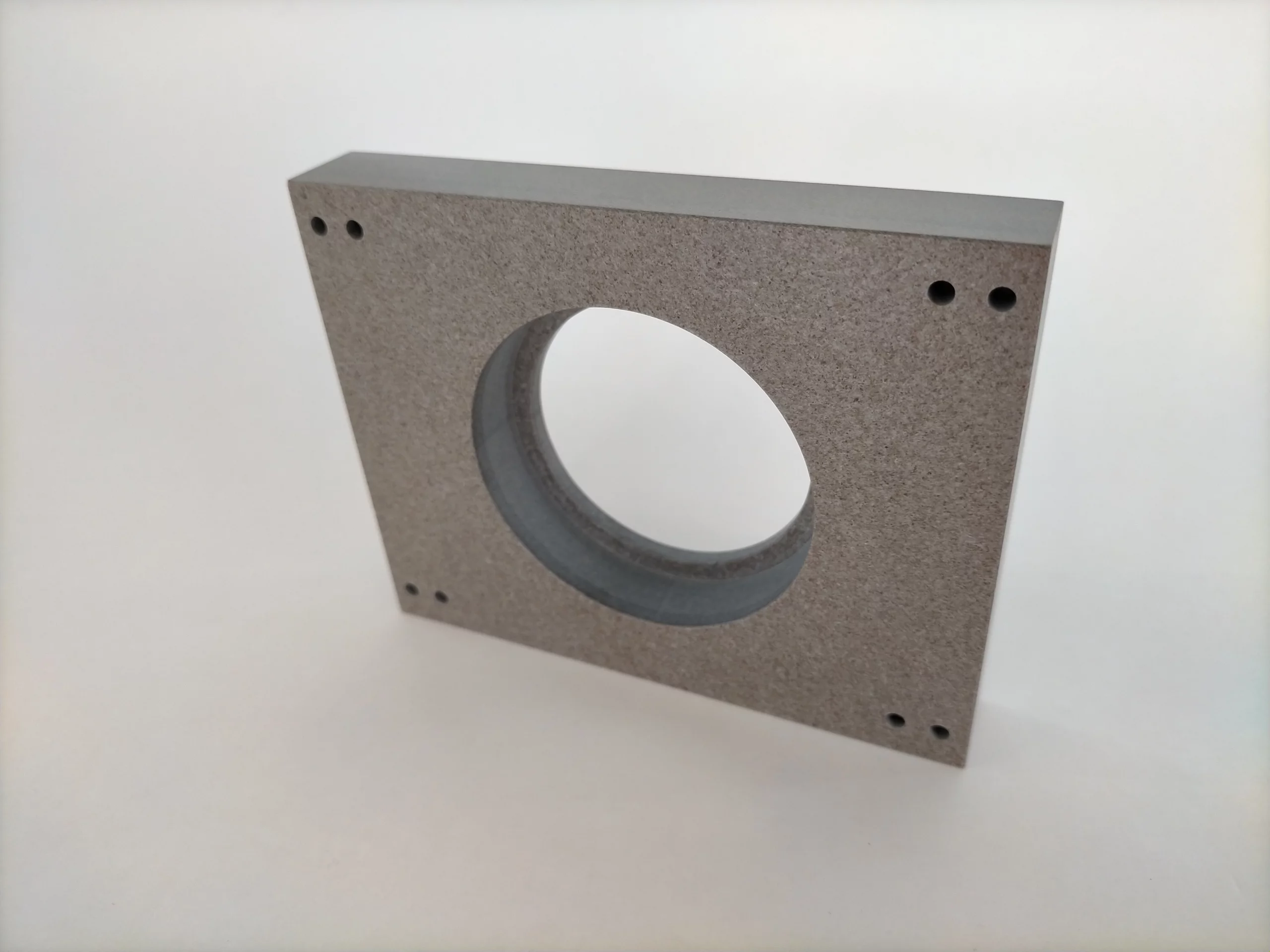
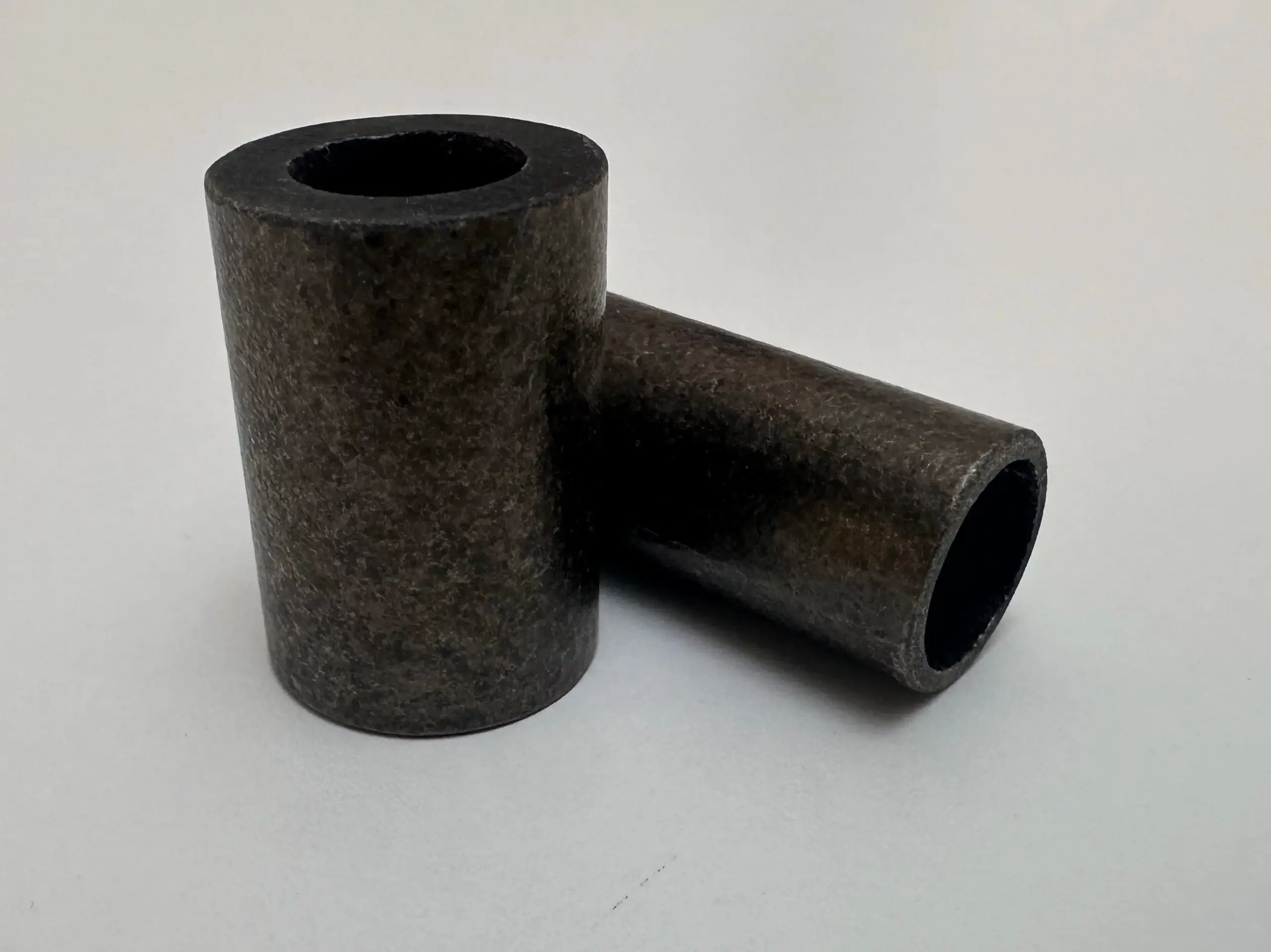
Gallery of machined parts in muscovite mica - phlogopite mica
Why choose ELIT for your muscovite and phlogopite mica solutions?
- High-performance materials meeting industry standards.
- Tailor-made solutions for your industry.
- Full technical support, from choice of material to installation.
- Compliance with current regulations
Need an insulation solution? Contact our experts for a personalized quote.